
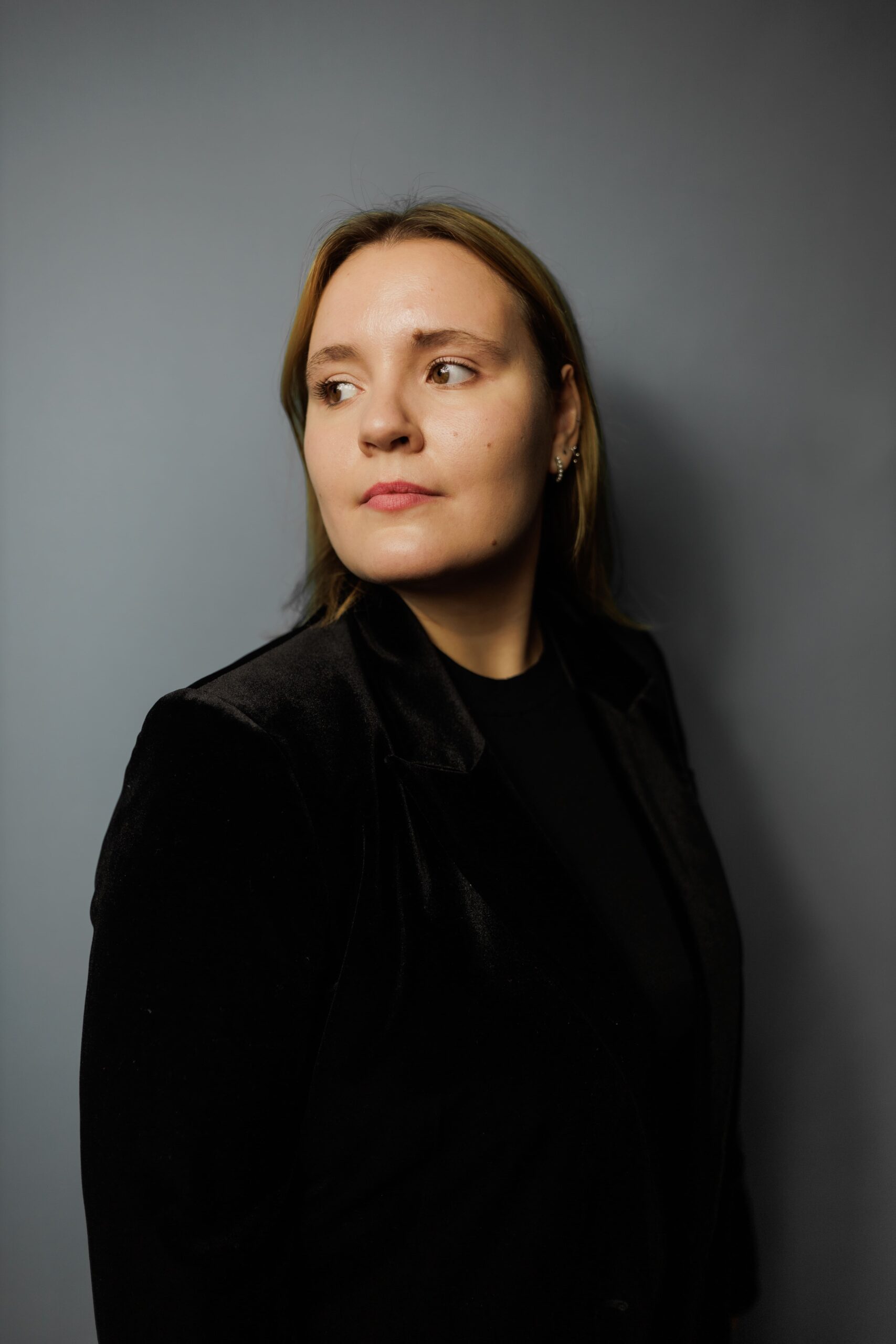
Mariana Rodrigues
Soprano
mariana-rodrigues.com
This summer you joined the cast of In the Belly of the Beast, alongside Carolyn Sampson, for a tour with Dunedin Consort, Mahogany Opera and Hera. What has this experience left you with?
It was a powerful experience, both musically and personally. It reminded me how music can give a voice to stories that still matter today, and how meaningful it is to create something with an incredible team. The whole production gave me so much joy! I did a lot of research, which gave me an even deeper insight into the period in which the music was written. It was wonderful to work so closely with everyone and to spend so much time together. I learned a great deal from Carolyn in particular, as an artist, as a human being and now as a friend.
Élisabeth Jacquet de la Guerre’s cantatas were reworked there to question patriarchal power through three biblical stories. How did you approach this dialogue between early music and a contemporary reading of the text?
It was initially a real challenge to dive into the text by myself. French baroque repertoire is very specific in its use of ornamentation and in the way the sounds of the text align with the melody, so I was trying to capture as much of that essence in the new reading and libretto of the material as possible. I remember one section saying “weighs heavier than chains and shackles” which took me a long time to shape until it truly felt wedded to the music.
In the end, I approached it by looking for the human truth behind the words. Although the music comes from another time, the emotions and questions it raises are still very much alive. I tried to honour the music while allowing the stories to speak to us today.
In the end, I approached it by looking for the human truth behind the words. Although the music comes from another time, the emotions and questions it raises are still very much alive. I tried to honour the music while allowing the stories to speak to us today.
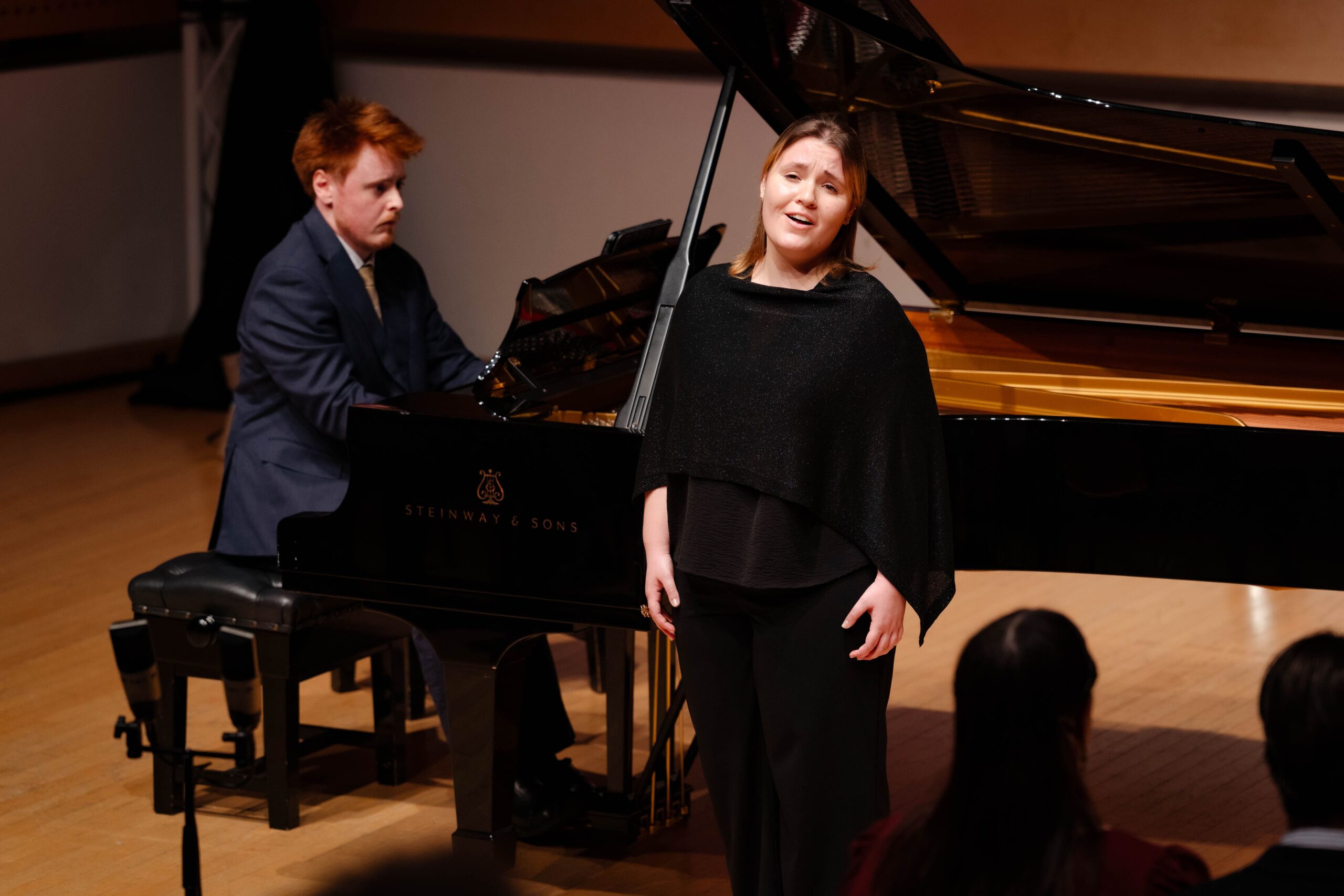
Chantefable explores the voice in the broadest sense, spoken, sung, improvised. With keyboardist Andrew Cowie, what did you want to share and offer audiences in building this project?
With Chantefable, Andrew and I wanted to explore the freedom of the voice and the space between music and storytelling. We hope to invite audiences into a world where things can unfold spontaneously, and where the unexpected is part of the beauty.
We are now exploring working with art galleries and bespoke events, with the aim of turning it into an ideal creative space of complete freedom. We initially started it as a new performance concept, a new way of performing and bringing text to life, and I feel like, in a way, we are making a new genre from scratch, one that is ours to share.
Your programmes span several centuries, styles and languages at once, from Portuguese folk songs to English poetry to French chanson. How do you put together such an eclectic programme?
To be completely honest, I mostly follow my curiosity and look for connections between pieces, even when they come from very different worlds. I love discovering how music from different times and places can speak to one another, often in surprisingly intimate ways.
There’s nothing more human than art and music, so when you look beneath the surface, you find there is far less of a divide than you might think. There’s a reason why people have been writing love songs and songs about everything you can think of and continue to do so. It simply shows that no one has quite mastered it yet. While I love singing Mozart operas and Bach cantatas, that’s also not all our genre has to offer, and I want to make more space for people to discover and not feel so intimidated by this genre. There’s something for everyone, and like we say in our concerts, they’re one of one, every performance is unique, so only that audience will hear that concert. When was the last time you went to a concert that was truly irreplaceable?
There’s nothing more human than art and music, so when you look beneath the surface, you find there is far less of a divide than you might think. There’s a reason why people have been writing love songs and songs about everything you can think of and continue to do so. It simply shows that no one has quite mastered it yet. While I love singing Mozart operas and Bach cantatas, that’s also not all our genre has to offer, and I want to make more space for people to discover and not feel so intimidated by this genre. There’s something for everyone, and like we say in our concerts, they’re one of one, every performance is unique, so only that audience will hear that concert. When was the last time you went to a concert that was truly irreplaceable?
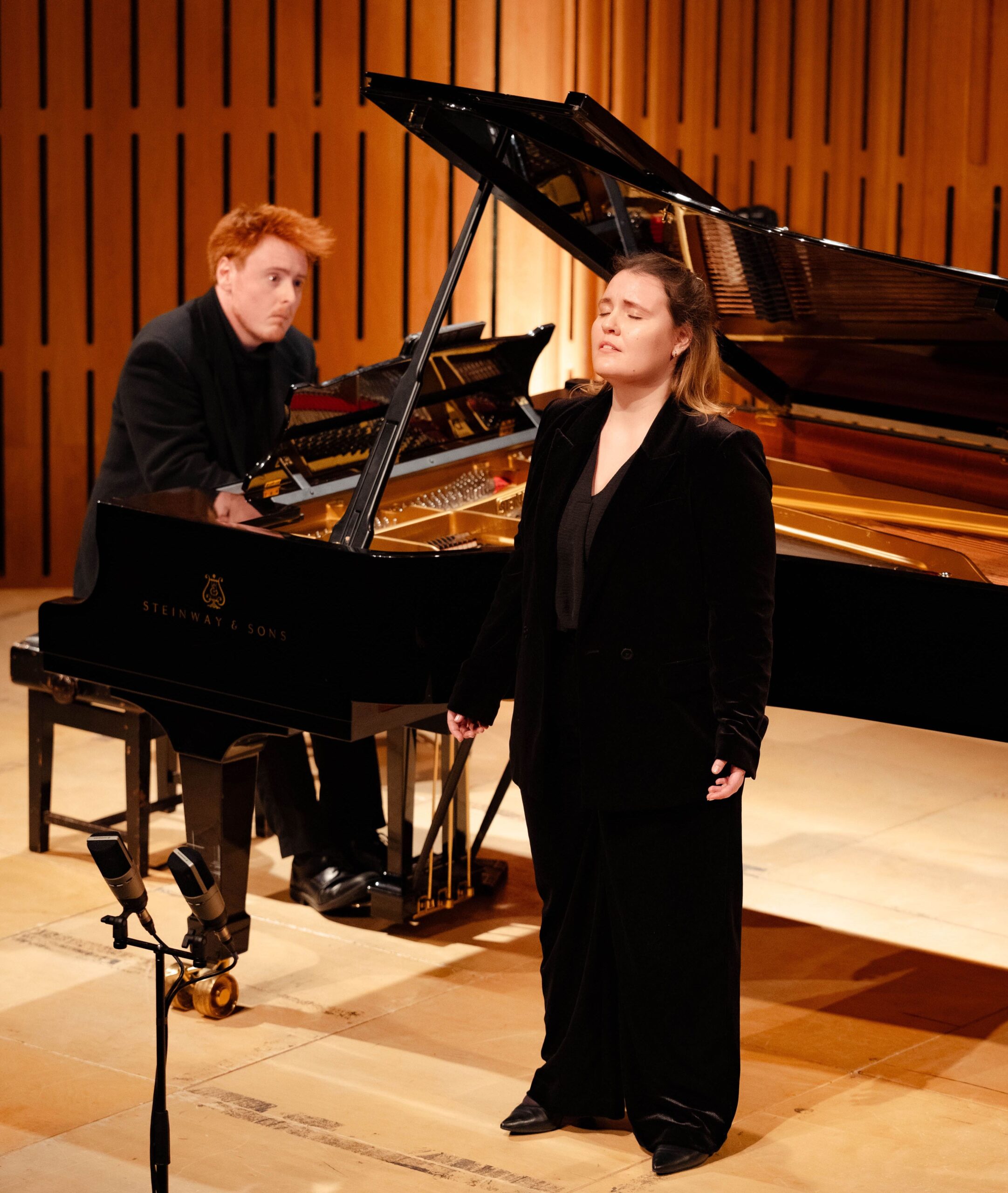
Improvising on stage means accepting that you never quite know what’s going to happen. How do you prepare for something that, by definition, never repeats itself?
For me, improvisation is about being prepared enough to let go. I work on listening, trusting my instincts and staying open to the moment. The real excitement comes from not knowing exactly where the music will take us.
I don’t actually have to improvise very much, as none of the poetry is improvised. That doesn’t mean there aren’t surprises for me, of course! Luckily, I have Andrew supporting me with his improvisations. He’s the best musician I’ve ever seen, and I have never seen anyone able to do what he does. He can play anything by ear in any key. To give you an idea of how extraordinary he is, he recently recorded a fully improvised score for a 100-minute feature film on Amazon Prime, all in a single recording session. If I didn’t feel safe with him behind me, I don’t know who I would feel safe with!
I don’t actually have to improvise very much, as none of the poetry is improvised. That doesn’t mean there aren’t surprises for me, of course! Luckily, I have Andrew supporting me with his improvisations. He’s the best musician I’ve ever seen, and I have never seen anyone able to do what he does. He can play anything by ear in any key. To give you an idea of how extraordinary he is, he recently recorded a fully improvised score for a 100-minute feature film on Amazon Prime, all in a single recording session. If I didn’t feel safe with him behind me, I don’t know who I would feel safe with!
Your training has brought you to work alongside major figures of the historically informed performance movement such as Masaaki Suzuki, Philippe Herreweghe and Rachel Podger, during the Bach in Leipzig series. What have these encounters taught you about interpreting baroque music?
Every one of those artists (and many more!) had a really unique way of making music and how they see it, so, somewhat paradoxically, it gave me more trust in myself as an artist than anything else. They all have a strong grounding in research, but it feels like a foundation for them to then explore rather than a dogma to be followed. There are many preconceptions about baroque music: that it is stiff, or that you need to know countless ornaments and national styles, but a lot of the actual music making is made by people who are curious about music, art, history, and want a freer way to make music than, say, a Wagner opera might offer.
These encounters have taught me to listen deeply and to approach the music with curiosity and humility. I’ve learnt that historically informed performance isn’t just about style or technique, but about truly finding life, spontaneity and meaning within the music.
These encounters have taught me to listen deeply and to approach the music with curiosity and humility. I’ve learnt that historically informed performance isn’t just about style or technique, but about truly finding life, spontaneity and meaning within the music.
You were the very first Concertist Fellow at Oxford Bach Soloists, a programme designed to support the transition from ensemble work to a solo career. What do you take away from this experience?
It was a valuable opportunity to grow in confidence and continue to explore my voice. It is important to have a supportive musical community while finding your feet, and OBS gave me that. I think it’s a great new programme they’ve started and I hope they continue it past my tenure there!
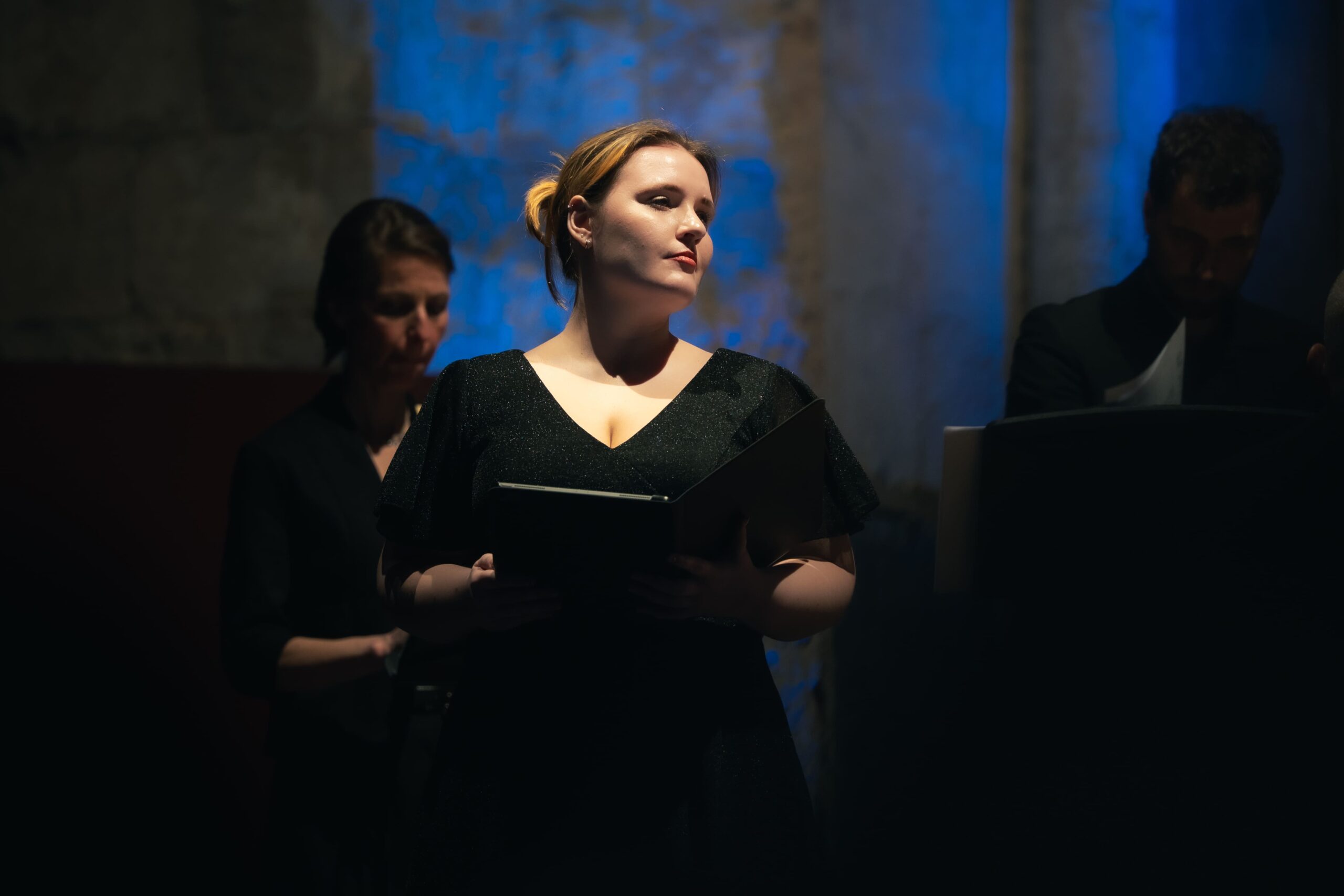
© Bachcelona Consort – Samuel Pereira
You grew up in Portugal before coming to study in London. What, of that identity, resists, or on the contrary transforms, in contact with a British and international musical environment?
If anything, I feel more Portuguese now! Portugal is always part of how I hear and feel music. Living and working in London has broadened my perspective, but it has also made me more aware of where I come from. I think both identities continue to shape and enrich one another.
Both Portugal and Britain have amazing singing traditions, my parents and grandparents all sang in choirs for as long as I’ve known. I do certainly miss the beaches and food in Portugal, but you can’t go wrong with a bacon roll and brown sauce. I’ve also found rediscovering English songs and poetry that haven’t been looked at for a century or more extremely rewarding!
What does being an artist mean to you today?
For me, being an artist in today’s turbulent world means staying curious, embracing uncertainty, being courageous and willing to take risks, and creating a safe space for a true connection with people to happen. It’s about sharing something honest with others, even when I don’t have all the answers.
What are your upcoming projects?
I think I will be very busy! I’m looking forward to singing Rossane in Handel’s Alessandro, being part of the jury for the Kathleen Ferrier Bursary for young singers, performing at the Handel Hendrix House for the first time and going back to Leeds Song for an alumni recital! Many more exciting things are coming, including collaborating with Arcangelo and Utopia in 2027… so keep an eye on my website! 😉
22/10/2026