
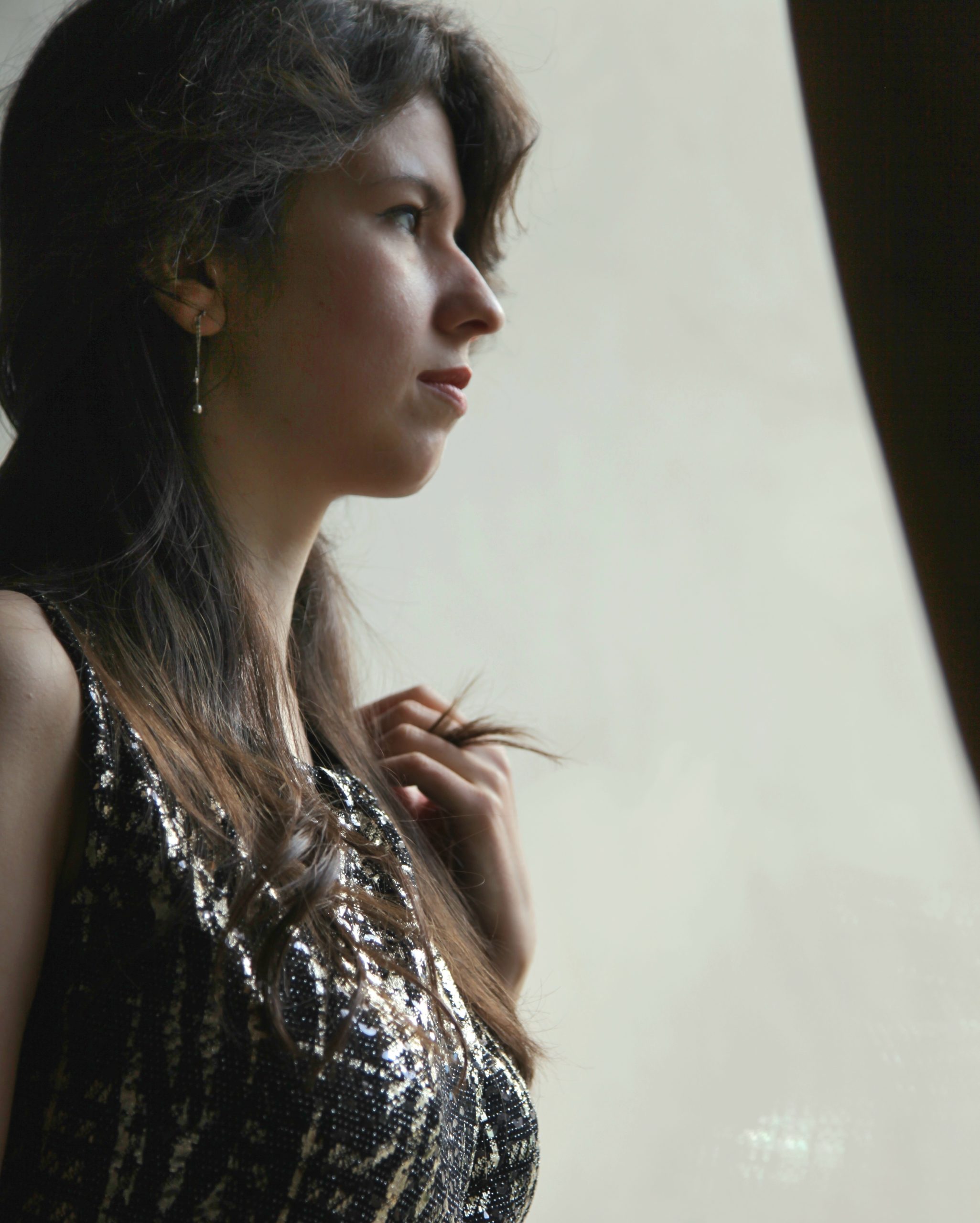
Diana Cooper
diana-cooper.com
From the classical, structured style of Haydn’s sonata emerges a playful, almost ironic character. This lighthearted spirit stands in contrast to the serious and dramatic nature of Chopin’s sonata – a true Romantic epic, immensely rich both structurally and emotionally. Between these two sonatas, the CD presents one of the most revealing cycles of Ravel’s impressionism : Miroirs, five pieces that depict, like reflections, various scenes from nature or life – moths, birds, ocean waves, a jester’s aubade in a Spanish village, and the tinkling of bells in a valley.
It is a very different experience from live performance, of course, but no less interesting. Communion no longer takes place with an audience of flesh and blood, but with a place, an instrument, and with music in its most elevated form. It is also a powerful experience of coming to know and surpass one’s own limits, deal with one’s energy level, and a springboard towards a deepening of our approach to each work.
Everything must be fully prepared before the project begins, but, just like a concert, recording is not a simple reproduction of well-prepared work. It is an exploration and a constant rediscovery of every musical page, as well as a rather rare opportunity to allow our interpretation to mature profoundly.
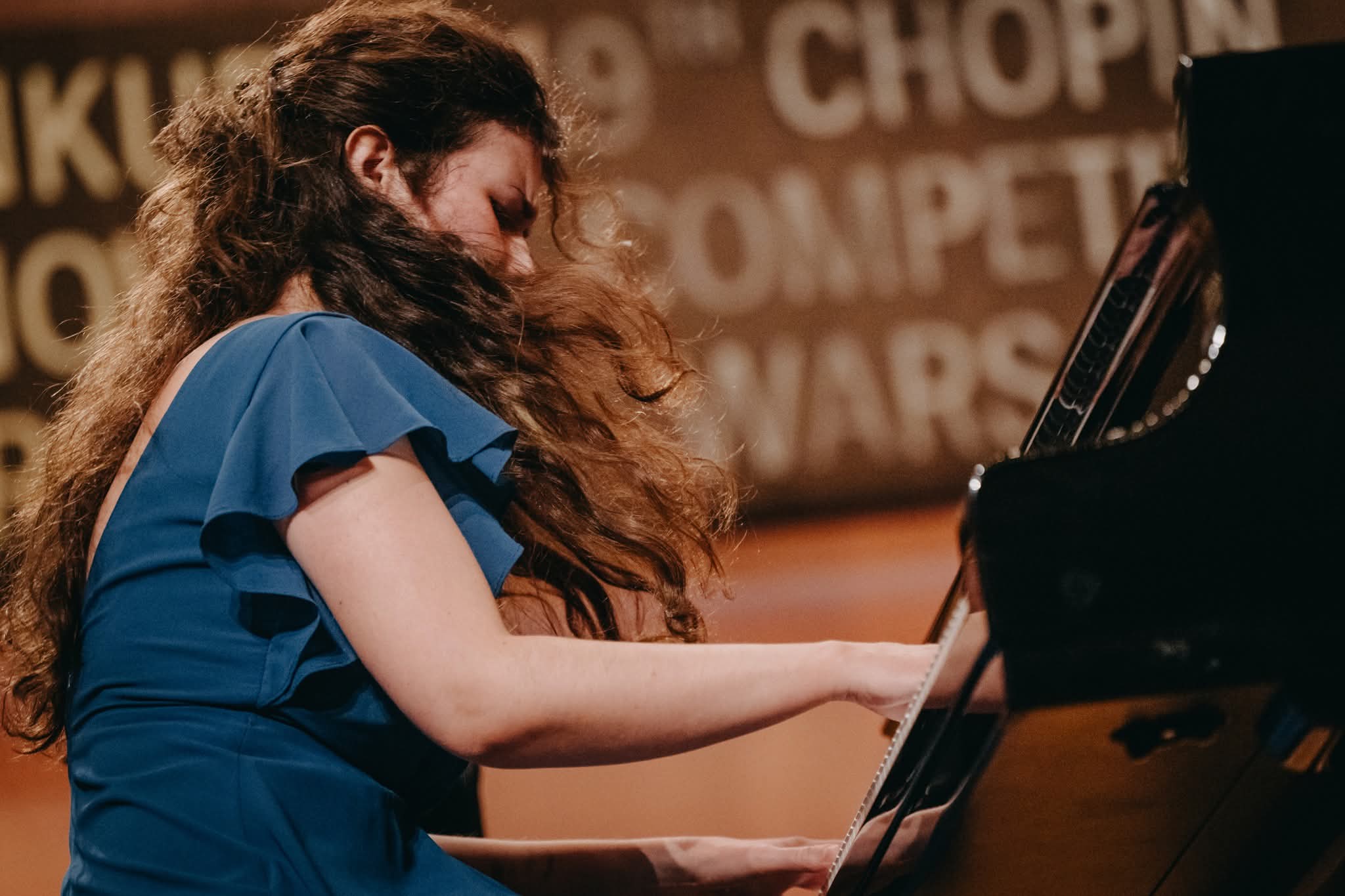
The intensity of the preparation was deeply exciting. The level of pressure was just as high as the level of excitement, and the passion and love I invested in my work served as my main source of energy. This fuel allowed me to push my limits every day and constantly surpass myself. Within the same repertoire I worked on for months, there were always new things to explore, both in the music and in my own abilities. I felt intensely alive !
Preparing for such an important and prestigious event also requires strong nerves. I devoted a lot of work to the mental preparation, exploring my own fears, subconscious mechanisms and mind limitations. It was such a big accelerator to self growth, to the point that I quickly realised how much the journey to the competition felt even more meaningful than the destination itself. I strongly believe that results are never the ultimate goal : whatever the outcome, the most valuable step in the experience lies in the path itself, representing such an extraordinary opportunity to develop and fulfil oneself on both artistic and personal levels.
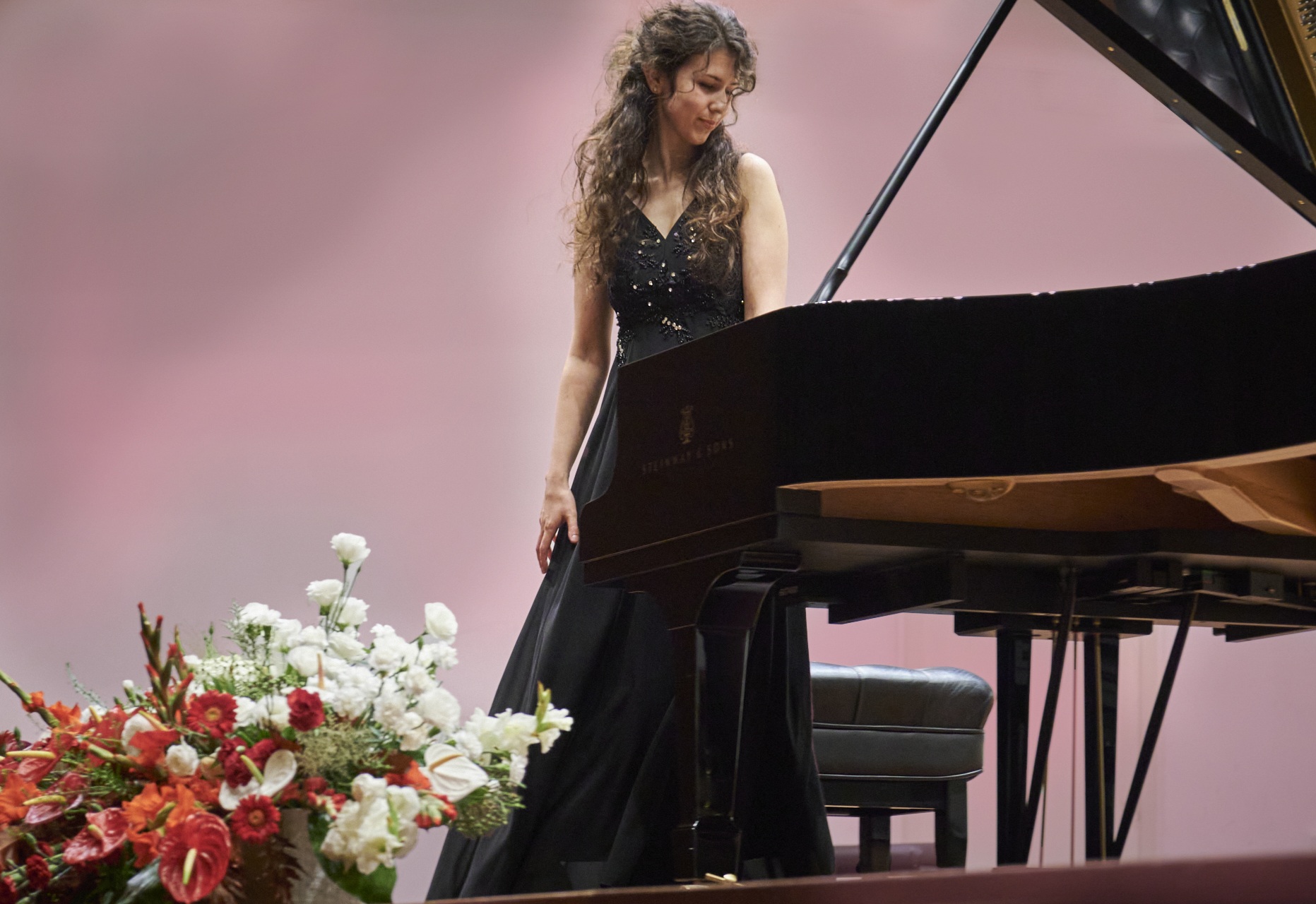
I believe that the pedagogy of an art such as music leans on two essential pillars :
On the one hand, there is the teaching of all the fundamentals necessary to become a good musician : the specificities of each musical style, the narrative or expressive intent of the piece, interpretation, certain musical “rules”, the art of sound and time, the pianistic means of realizing every intention at the instrument, technical approach.
On the other hand, there is guiding the musician towards becoming an artist, by transcending the score in order to embody its message on a deeper and higher level. Finding one’s true identity through music and letting the music find us, until a state of oneness is reached.
I believe that the combination of these two forms of teaching is the most powerful and enriching.
We can learn immensely from all external sources, whether through teachers or life experiences. Yet it is essential to remember that these sources only reflect what already exists within us, helping to bring it to light. The answer your heart gives is always the right one for you ; it should never be ignored or betrayed. Keeping faith in this inner voice — and in life itself — is one of the strongest foundations we can rely on, especially in moments of difficulty or challenge.
Finally, it is crucial to ask ourselves the right questions. Why do you do what you do? How does it serve your growth, your happiness, and that of others? And when success comes your way, how do you experience it : as an accomplishment of the ego, or as an opportunity to serve your values on a larger scale and reach more people ? It is always important to return regularly to our deepest values and purposes, and to build our artistic identity upon them. It is worth remembering that what we do serves who we are. Music, like anything else, is a means, never an end in itself.
By reaching this state, we become better beings : more united, more loving, wiser, and more connected to our inner joy.
My projects for 2026 include a CD recording entirely devoted to Chopin. This recording will take on a journey through the many facets of Frédéric Chopin, featuring contrasting works that mirror light and darkness. It will include, for example, the First and Fourth Scherzos, the Barcarolle, the Polonaise-Fantaisie, the Andante spianato and Grande Polonaise brillante, along with other masterpieces.
In addition, I have concerts scheduled in the coming months across Europe (UK, France, Germany, Poland, Greece) as well as in the United States. My repertoire will explore a variety of styles, from Scarlatti, Bach, Beethoven, and the Romantic composers, to Granados, Ravel, as well as Šimun Čarli Botica, a young and talented Croatian composer, already well-established in his country.
05/01/2026