
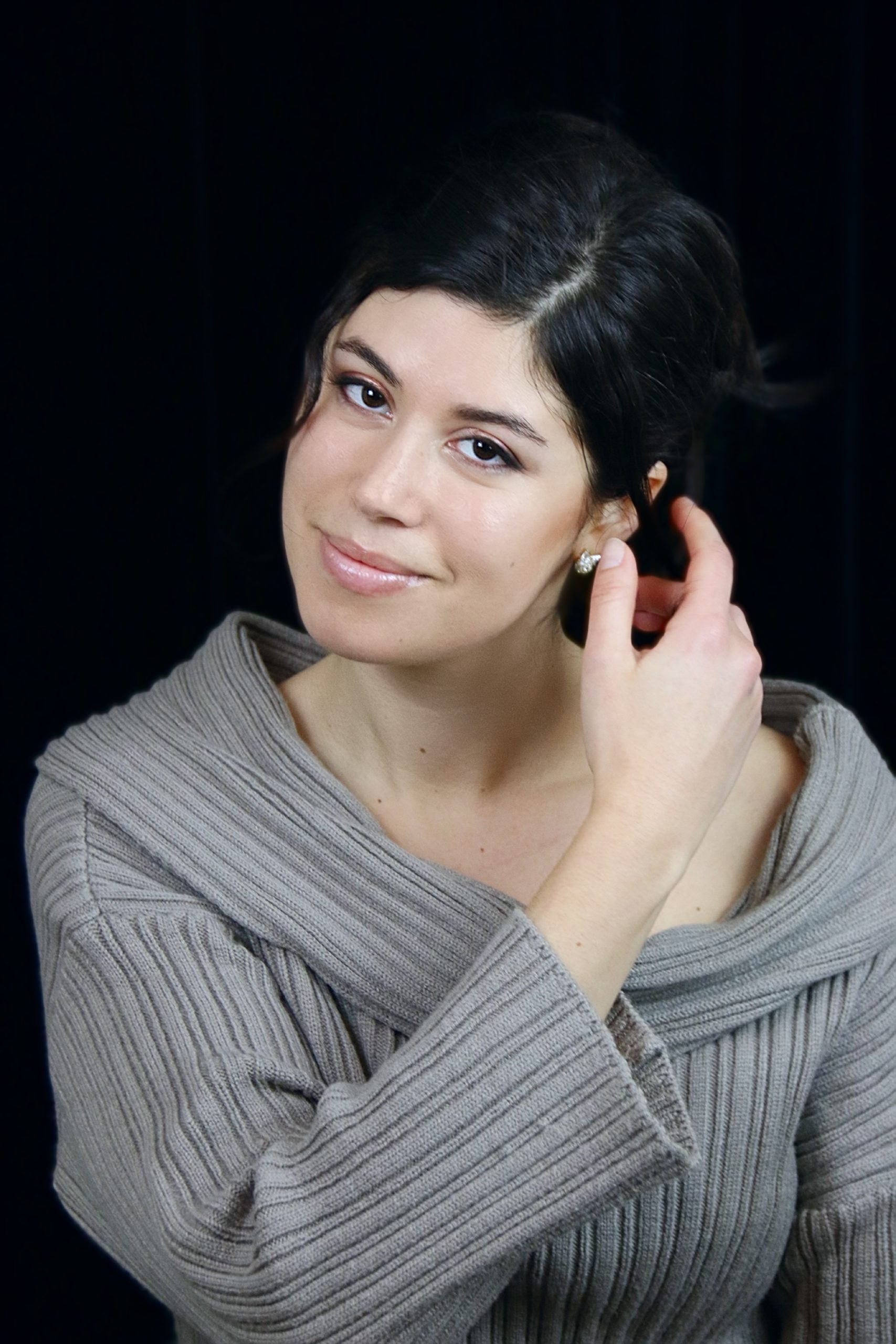
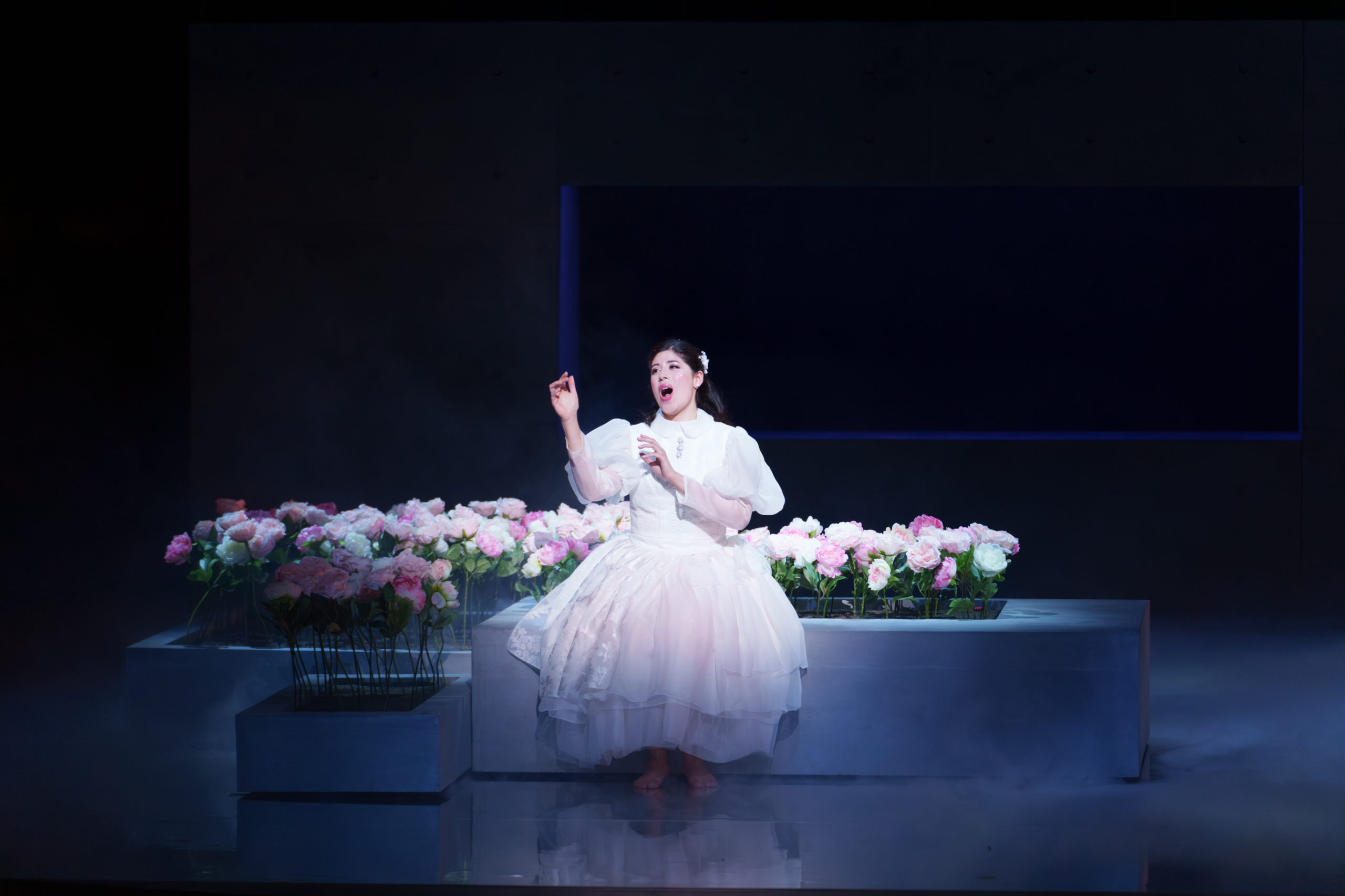
© Cyril Cosson

Déborah Salazar

Soprano
deborahsalazar.com
FR
EN
When you build a role, what do you look for first?
The link between the text and the melody. The link between the melody and the harmony, the leitmotifs and the counterpoints in connection with the text. Everything is written. Our role is to come to terms with the composer and the librettist, to feel their logic and to forge a reassuring and coherent connection that helps us adhere body and soul to their message.
Do some roles transform you more than others?
The leading roles with depth and a dramatic evolution, or those with a harmonic and orchestral colour in agreement with the subtlety of the text.
How does your experience at the Académie de l’Opéra-Comique feed your approach to this repertoire?
I learn to use more flexibility, to find more subtle vocal colours in connection with the text, and to use clarity. Prosody guides musicality. It is predominant in the technical hierarchy.
© Cyrille Cauvet
Do you feel like the same artist in recital as in opera?
In recital, we have a great responsibility, because we must bring the audience from one world to another in a short time and without the support of staging. I must be very agile and quickly give a clear and characterised atmosphere. One may perhaps lose in gradation and subtlety as a result, but it is an interesting challenge. One must use a lot of imagination and be a powerful driving force to create this with only two people.
At the same time, it can give rise to a strong intimate connection and a privileged experience for the audience. Opera is a much more collective adventure. We are very interdependent and we feed on each other’s strengths. That is what I prefer: letting myself be inspired in the moment and playing with the surprises that our partners, backstage and on stage, offer us instantly. There is a bit of everyone in each scene and each character, and that is what makes the experience so rich and generous for the audience.
You are taking part this year in the Wigmore French Song Exchange: can you tell us about this experience?
In June, we will give two recitals, one at Salle Cortot and one at Wigmore. We have had monthly sessions at Wigmore since November with Felicity Lott and François Le Roux, who are great specialists in French music and in the stylistic particularities of each composer. Working in the setting of this hall, whose acoustics are specifically designed for this repertoire, is a great opportunity to shape our repertoire.

The English have a lot to teach us about our own repertoire in terms of sensitivity and attention to the piano’s subtext. The fact that the participants come from several English-speaking and French-speaking countries is very stimulating for confronting traditions and drawing inspiration from them.
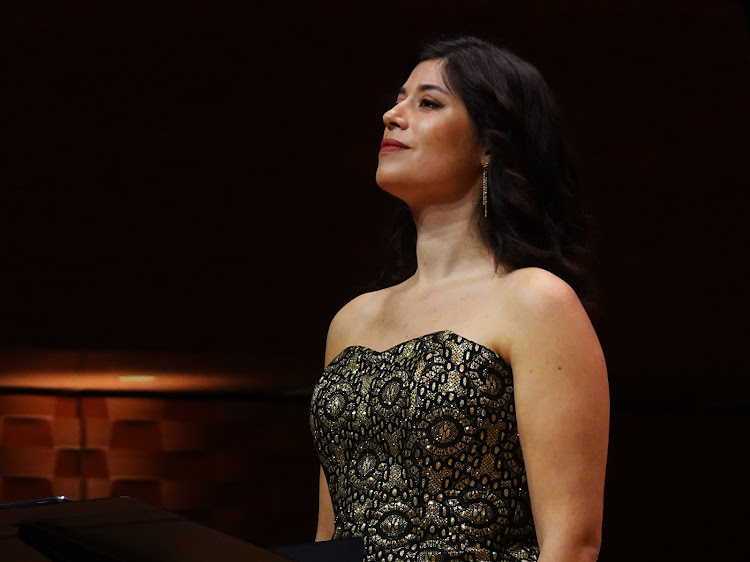
© Jean Fleuriot
What happens for you in the moments just before going on stage?
I focus on my objectives, I connect to my light, to the people I want to touch that evening and who do me good. It is the best way to forget fear. I align myself and place myself in my character. I dive into the music and the text and immerse myself in the chance I have to be at the heart of this beautiful material.
And once on stage, do you feel rather protected… or, on the contrary, exposed?
Excited, ecstatic, sometimes very calm on the contrary. Nothing can happen to me if I am well prepared. Everything becomes joy. I feel invincible and carried by what surrounds me. And if my colleagues are in difficulty, I send support and love, and I make an effort to be even stronger and brighter to help them get back up. And that creates a bond and a palpable emotion when we pull ourselves together and climb back up together. One must always extend a hand, including to oneself.
You are joining the Lyon Opéra Studio for two seasons: what concretely changes when one enters such a structure?
I will be on stage all year round in all productions, with several leading roles. I will have an enormous amount of work and little preparation time. Anticipation, organisation, endurance, rapid renewal of inspiration, quick regeneration… this is the best way to prepare myself for a demanding international career.

The vocal coach and the répétiteur are fantastic, and I know I will be able to progress in Slavic repertoire and open my voice even more. Working alongside great conductors, singers and stage directors will be a new level of personal artistic development and career fulfilment, to aim higher and one day be called to work with this level of professionalism in major international houses, but this time as a freelancer.

That is all I wish for myself, and I know that the Lyon studio is the perfect springboard for these ambitions. Now it is up to me to work and deserve it!
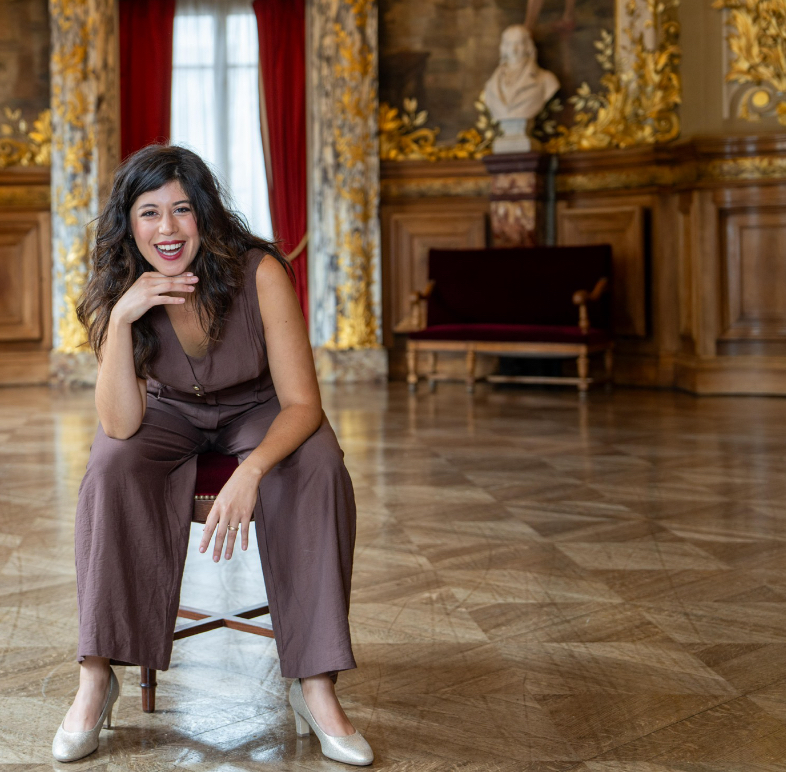
© Édouard Brane
What does it mean to be an artist for you today?
The same thing as 1000 years ago: to touch hearts, to catharticise, to transmit wisdom, to soothe hatred, to bring people together, to connect, to unite, to vibrate in unison. To be a craftsman of one’s art with the same level of demand, rigour, self-denial and discipline as a beginner, and with the desire to discover and experiment. To never take anything for granted, because that is where the fall begins.

To know how to charm, to reveal oneself just enough through new media (social networks), to be opportunistic in order to mobilise financial resources for truly important and necessary projects for the public and society (banks, patrons, subsidies). Art is the bulwark against war. That is where money should go first, and that is what I advocate. To be a citizen who listens to the world and anticipates the desires and needs of the people around us backstage and in the audience. A cool head, a warm heart, and to give love.

To protect oneself and not try to go too fast. Longevity is more important, because in a very fast society, patience is put to the test. But this profession must be sustainable, and one does not leave a mark in history and in hearts with a meteoric career. To choose one’s roles, one’s path, the people around us carefully. To dream while keeping one’s feet on the ground.
What are your upcoming projects?
Mademoiselle Lange in La Fille de Madame Angot at the Opéra de Lyon
Lisette at the TCE in La Rondine, notably with Pene Pati
Solveig in Peer Gynt at the Opéra de Lyon
Several small roles and a solo recital at the Opéra de Lyon
A solo recital at the Opéra de Bordeaux
Cover for Lucrezia Borgia at the Opéra de Lyon
A role in the reopening production at the Opéra-Comique
A recording project… I won’t say more for now, it is in preparation…
03/05/2026