
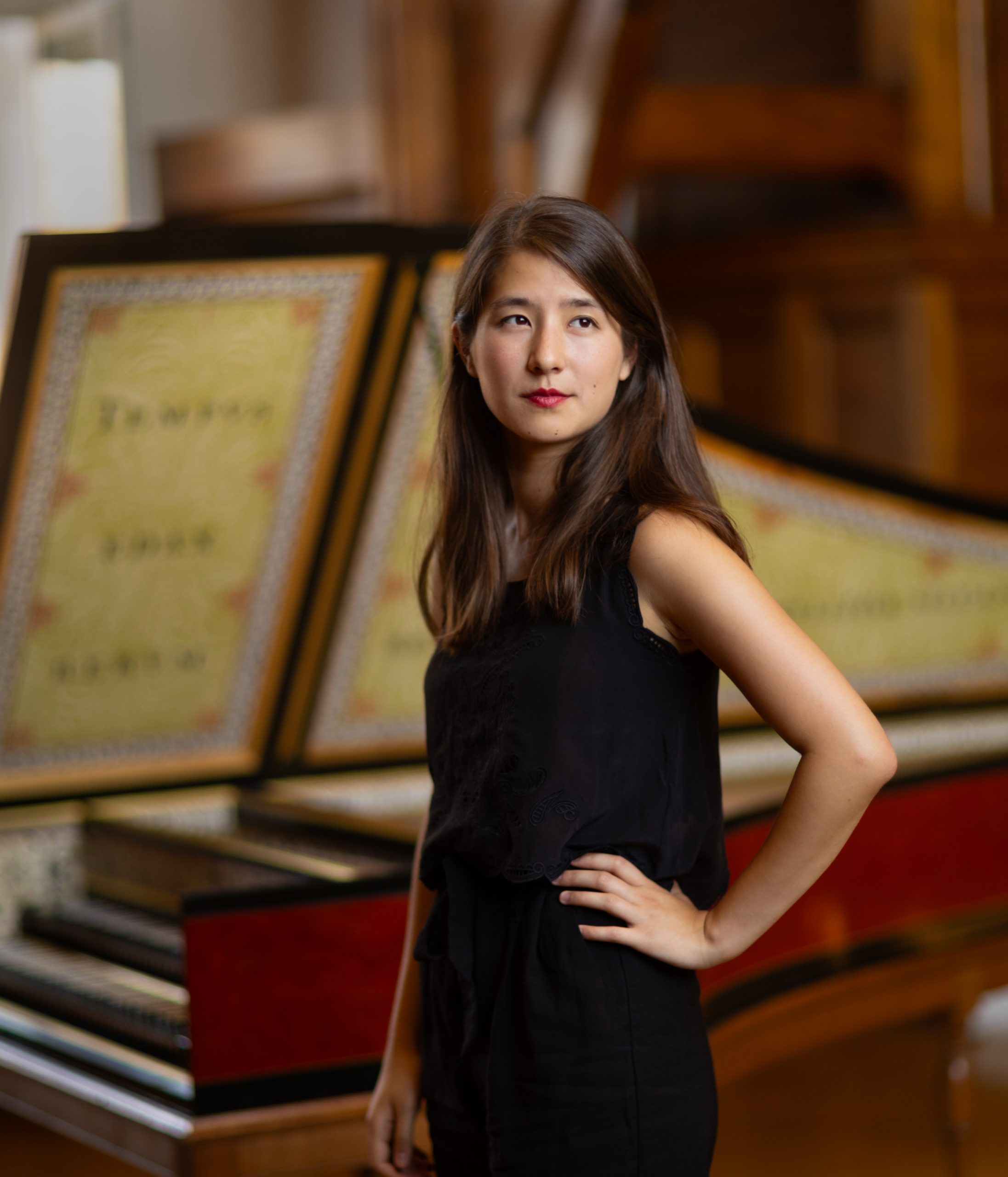
© Tim Macklin

Apolline Khou

Harpsichordist – Pianist

apollinekhou.com
FR
EN
You perform on both the harpsichord and the piano. How do these two instruments influence your work and your musical thinking?
By playing several instruments, I think that I gradually let go of the idea that I had, more or less subconsciously, that mastering an instrument is an end in itself. By developing my practice and my listening through different keyboards, I became aware that an instrument, as beautiful as it can be, remains an instrument. In the literal sense, it is therefore a means to convey something greater than itself : ideas, feelings, and everything that music can evoke and represent.

Of course, some instruments, according to their nature, their making or their history, correspond more or less to some musical speeches, and I am lucky enough to be able to explore this diversity which really broadened my musical reflection and imagination.

How has your approach to sound and touch evolved since you started playing regularly on historical instruments?
What captivated me when I discovered early keyboards is their diversity and uniqueness. They escaped standardisation, and they each have a personality and an incredible sounds palette, which impose sensitive and attentive listening, flexibility and creativity, rather than force and fixed repetition of an interpretation or an idea.

I was particularly impressed by my visits of the Cobbe Collection in Hatchands where I played some magnificent early keyboards, from a beautiful Ruckers harpsichord to Chopin’s Pleyel which is extremely and incredibly soft, as well as wonderful XXth century pianos, including a Russian Becker that I could play in a concert last summer. The originality, the depth and the personality of each of these instruments left in my memory some unforgettable impressions, and they continue to inspire me towards a poetical and unique playing for each performance.
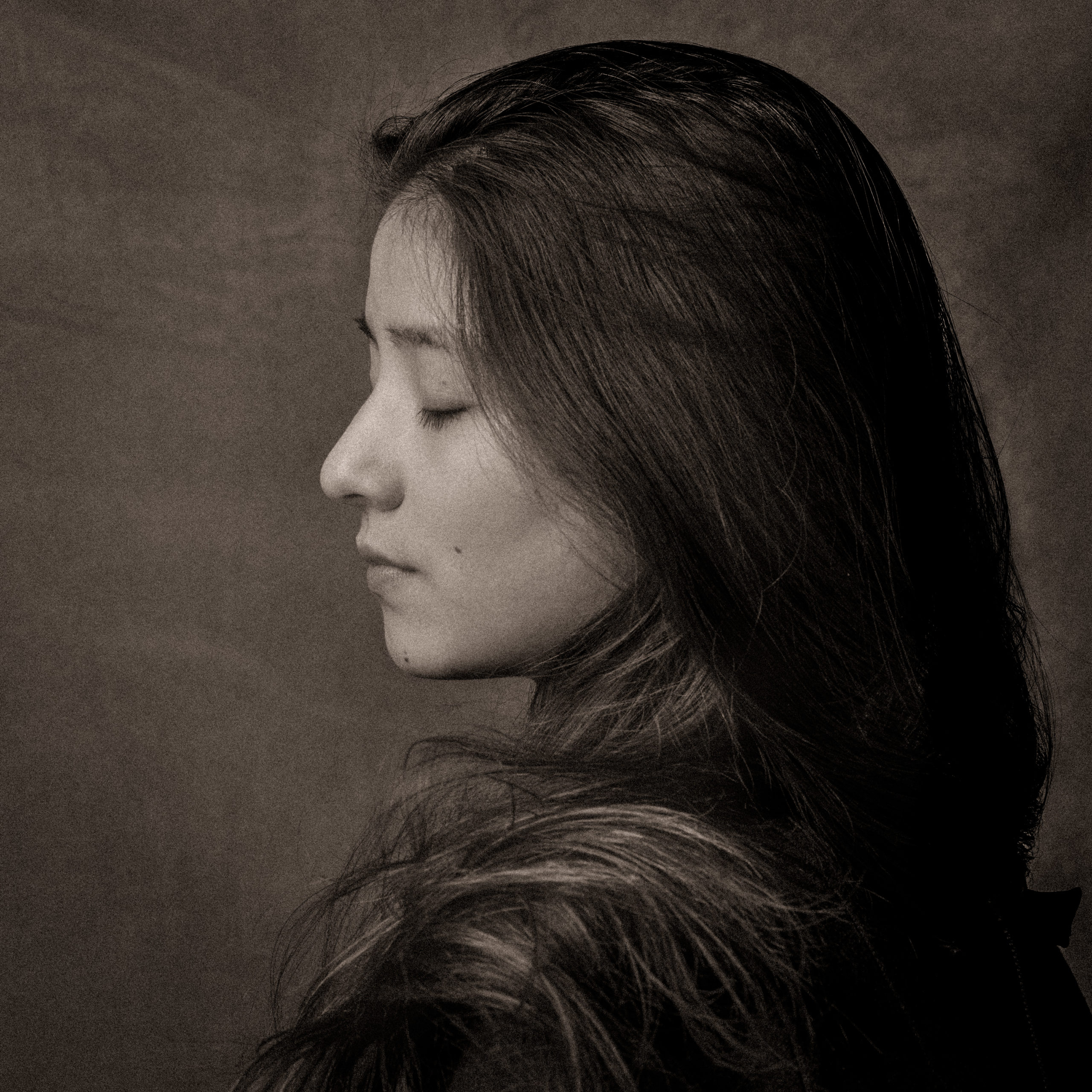
© Marielle Huneau
What has working as a continuo player taught you about listening and interacting with other musicians?
The continuo requires an active listening and a harmonic consciousness, as well as a consciousness of the other in a broader meaning. Beyond the written bass line and noted or suggested harmonies that we have to realise, there is a whole improvised dimension that comes to life only from the encounter with the other musician that we accompany, and that depends on their way of playing the piece, on their personality, on the instrument, the acoustic, the place, so many things…
All of this is of course valid for any music making, but in the case of the continuo, all the non written elements can change in a phenomenal manner and individual to each continuo player.

This listening stage that I discovered by practicing continuo and that I am still taming, is a state that I am trying to keep no matter what I play, in solo or in ensemble. This is for me one of the most fascinating things to explore and to live in music. To search for balance with other voices in real time can create true magic.
How do you find the balance between stylistic rigour and expressive freedom in Baroque music?
I believe that, as with any musical tradition we discover, rigor and freedom are not contradictory. I like to compare it to learning a language: the more we understand its codes and subtleties, the more freely we can express ourselves, and eventually, we can even start to dream in that new language.
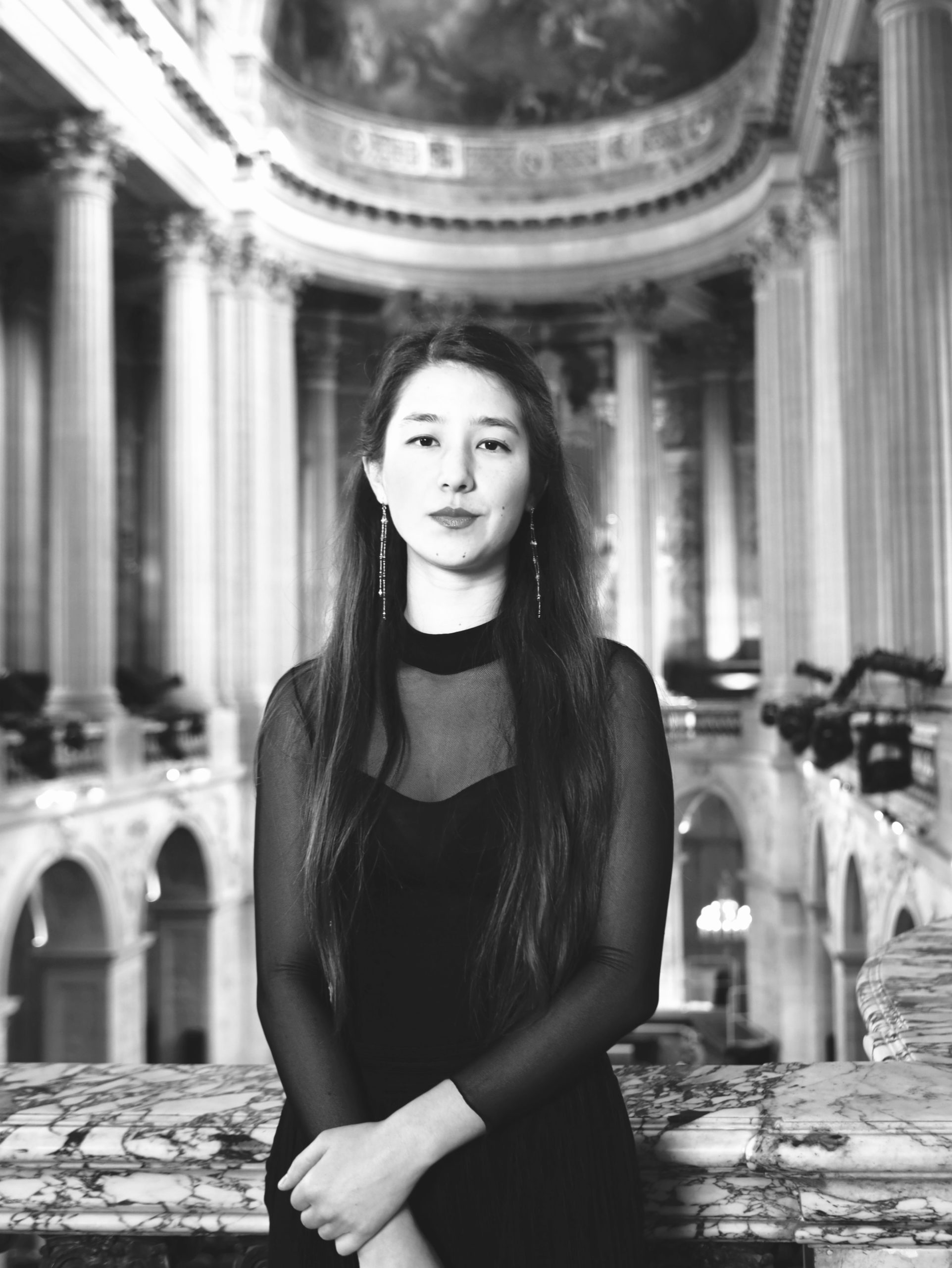
© Morgane Vie
How does your work as a resident continuist at the Centre de Musique Baroque de Versailles shape your artistic identity today?
Thanks to this residency, I’m lucky to be surrounded every day by incredible singers, instrumentalists and specialists, and every encounter, rehearsal, or musical moment within this institution is extremely precious to me.

Through the music we perform, the venues like the Chapelle Royale, and the musical tradition carried by the CMBV, I am fully immersed in French Baroque music. This world has been dear to me for a long time, but every day I discover more of its subtleties and jewels from the repertoire. It is a privilege to be able to absorb this unique style within such a rich and inspiring setting.

What differences have you noticed in the way Baroque music is approached in France and in the UK?
My experience was quite different in each country, due to the roles I had in each. A student for four years in London at the Royal College of Music, then fellow, I purposely explored many different aspects of music in general. I appreciated that I was encouraged to take initiatives and to create bridges, as well as London’s characteristic international openness. I think that this can be felt in the early music world : programmes and ensembles are very varied and explore many different things, with different paces, which pushes to be adaptive and to take on new perspectives.

Having started early music quite late, in France, I know mostly Versailles, where I play mostly French music, in a historical context. I find myself in a specialised world that is focused on perpetuating a musical tradition.

To compare, without wanting to generalise, as I am only speaking from my own experience, I find that in the UK, there is more emphasis on spontaneity and flexibility, whereas in France, the approach tends to focus more on long-term reflection and careful thought. Ideally, of course, these two approaches coexist and complement each other.
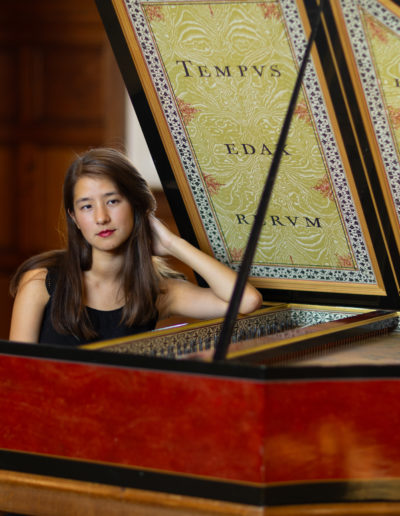
© Tim Macklin

Being a Historical Keyboards Fellow at the Royal College of Music placed you in a role that combined both performance and teaching. How did you experience that?
I started teaching when I was relatively young, I was sixteen, and I took part in many concerts during my years at the RCM, before the fellowship. I don’t separate the interpreter status from the teacher or accompanist ones ; even though they have different faces, they are for me all based on the love for music.

My fellowship was a transition between student life and professional life, and this experience gave me responsibilities that made me grow and become aware of what I love in music.

What does being an artist mean to you today?
I can only say that I feel extremely fortunate to be able to live by music and to contribute to sharing what is beautiful, what elevates and unites us, in a world that needs it more than ever.
What are your upcoming projects?
I continue my residency at the CMBV, with a lot of beautiful French Baroque music, which will be performed in Versailles. I will be playing continuo, but also performing solo on the great organ for one of the concerts at the Chapelle Royale. I’ll also be involved in some opera projects, details of which will be announced soon.
On a more personal approach, I am continuing my work on transcriptions for solo harpsichord and I plan to collaborate with artists from various backgrounds – more updates on this to come too!

26/01/2026