
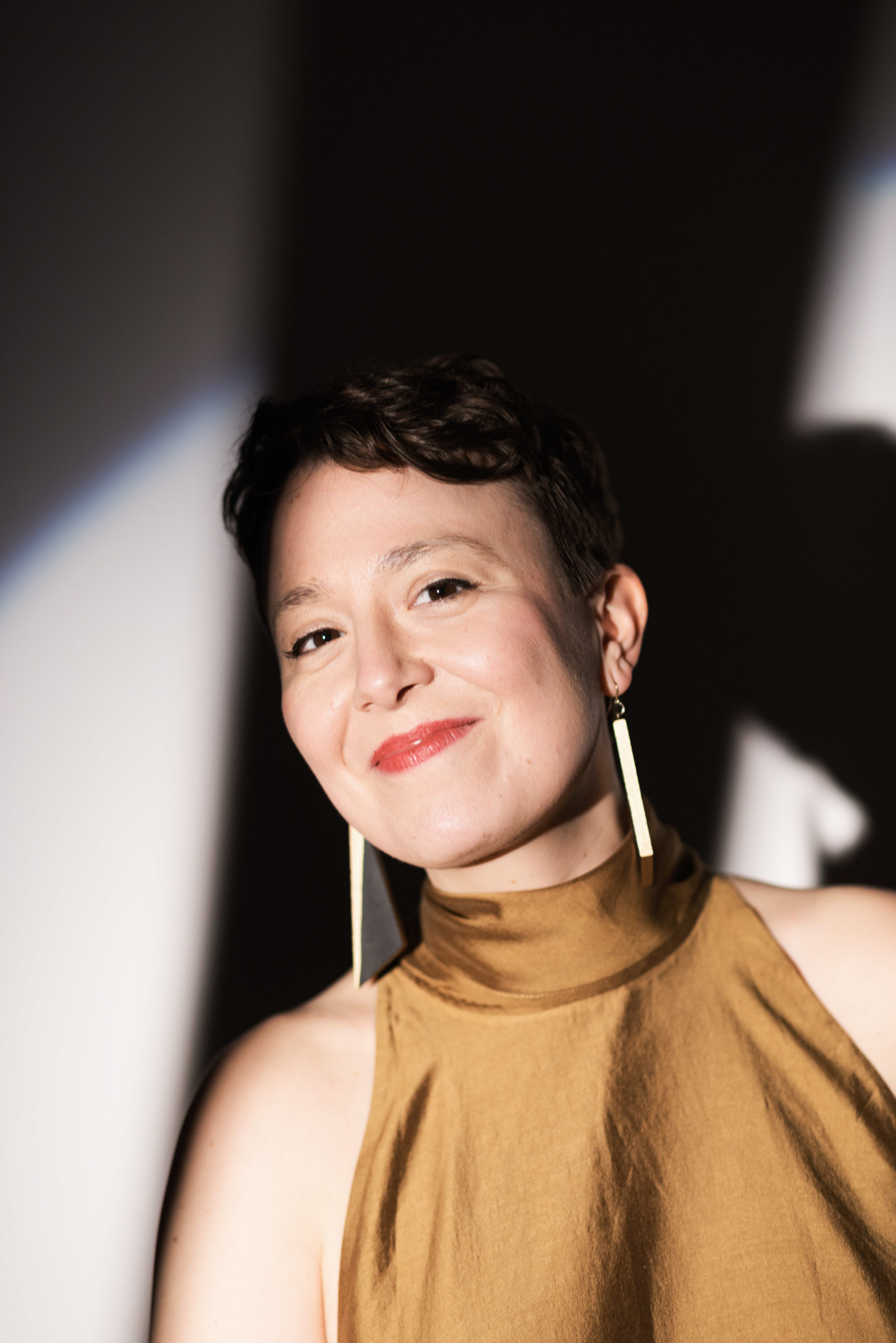
Justine Eckhaut
As a Lied pianist, I am at once a chamber music partner, conductor and stage director. I really enjoy this supporting position in the shadows. The books of Gerald Moore have accompanied me enormously in this reflection, with magnificent humour and intelligence.
At the moment, I am particularly interested in absences. Passages removed from a poem are sometimes just as revealing as those kept by the composer. Schubert, for example, removes the final stanza of Die Forelle by Schubart, and Schumann chooses not to set the final poem of Frauenliebe und -leben to music. These silences are very revealing.
More generally, the presence of a text shapes and makes the vocal line living and organic. It is very inspiring when one also wants to sing at the piano! Beyond the text, I would say that collaborating with singers has truly taught me how to breathe and how to be aware of my body.
Concerts are magnificent moments, but also moments of great vulnerability. Something unexpected always happens on stage, despite rehearsals. A tempo becomes more flexible with adrenaline, a consonant takes on more weight, one suddenly adds a breath… It is precisely this element of unpredictability that makes a concert living and unique. Going on stage knowing that the other person will listen to every variation, react to it, even play with it sometimes, creates immense freedom.
It is this shared vulnerability that creates a true duo.
The three of us can observe and vary the influence of tempo, of different intentions and interpretations on the musical result, imagine an orchestration in order to refine the texture of the accompaniment, discuss the meaning of a line of poetry and its resonance today. This new generation of students is very curious, it seems to me, even more interested than mine was in moving beyond conventions and also exploring repertoires off the beaten track. Our discussions are fascinating and inspiring.
I do not think there is any fundamentally wrong interpretation of the meaning of a poem; the possibilities are infinite. The extremely varied settings by many composers of the same poem as short as Goethe’s Über allen Gipfeln ist Ruh’ is proof enough of that. When one begins to associate Lieder together to create programmes, the possibilities for juxtaposing pieces become endless.
Explaining gestures, accompanying my students as they explore new sonorities, trying to develop inner listening and listening to the other, helping them choose an interpretation in full awareness all help me recover that lucidity in my own playing.
I also happily relive the total and precious freedom of those years of study, the possibility of playing absolutely whatever one desires, and of regularly having access to a platform with a benevolent audience. My festival berlied is an attempt to revive this freedom again and again.
We are now a team of three women fully in charge of the project. This year, we will perform the complete works for voice and piano by the Berlin composer Ursula Mamlok, and invite our audience to rediscover the work of Oscar Posa.
Then, finding myself “on the other side” has taught me a great deal about the reality of the music industry today. Where does a festival’s funding come from? What proportion of the overall budget comes from ticket sales? What makes one invite a duo after an unsolicited application? How does one choose a venue? What brings audiences in? The way I address presenters has completely changed since then.
Rather than speaking about my own experience, I would rather tell two anecdotes which seem meaningful to me.
A few years ago, I performed a recital in Bavaria with my friend, the bass Frédéric Jost, a very virtuosic programme of German Romantic ballads. A very old man came to see us at the end of the concert, hunched over, moving very slowly with crutches. He looked up at us with very lively eyes and told us that hearing us play like that, sometimes so fast and with such passion, had, for the space of an hour, given him the feeling that he could dance again.
I regularly perform with the KNM, a contemporary music ensemble in Berlin. This ensemble hosted the Kyiv Contemporary Days festival in Berlin in 2023 because it obviously could not take place in Ukraine. I asked the Ukrainian musicians and invited composers about their activities, their fears, their possibilities of travelling, and they told me that since the beginning of the war there had been concerts every day in Kyiv. It was unthinkable not to continue playing in such circumstances.
Otherwise, I will return to the Heidelberger Frühling in June to celebrate the opening of the Lied festival while also paying tribute to Thomas Hampson on the occasion of his birthday. This festival welcomed me as an academy participant six years ago and I learned an enormous amount there, especially about Schubert’s Lieder.
In October, before the 5th edition of berlied, the first recording by my trio Dara, London Fog, will be released on the Aparté label, with an English programme that is very close to our hearts!